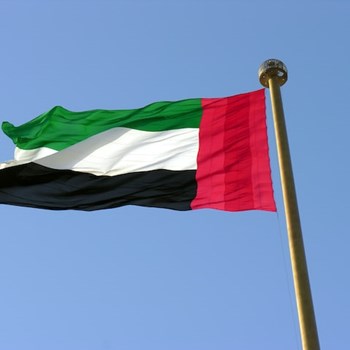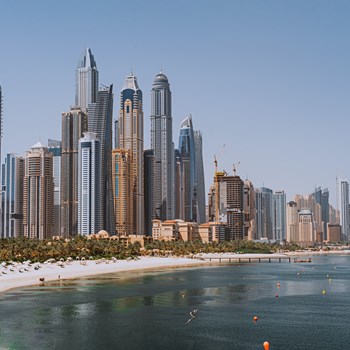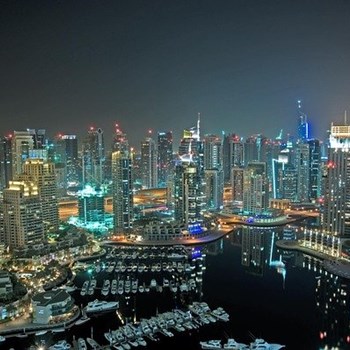
United Arab Emirates
Articles

The Rise Of The Institutionalised Family Office In The Middle East

The Rise Of The Institutionalised Family Office In The Middle East

No More Hedging Their Bets, UAE Is All In On Hedge Funds

United Arab Emirates: The Dynamic Development Of Islamic Finance

Untangling A Web Of ‘Middle East Issues’: Key Considerations For Web3 M&A In The UAE

UAE Insurance Sector – Year On Year Growth

AML And RegTech In The UAE

Sheikhing Up The Virtual Asset Industry: UAE Set To Become The Global Crypto Capital

What Is Behind The Popularity Of Foundations In The UAE?

Insurance In UAE: Ready For The Big Leap

Shifting Sands: Wealth Structuring Developments In The UAE

The International Corporate Registry of Choice
UAE, the International Corporate Registry of Choice.

Why Dubai?

UAE: Corporate Governance and the Limited Liability Company

United Arab Emirates: Evolving Legislation

UAE: The Investor’s Favourite Middle Eastern Destination
Fact File
- Fact File Supplied By:
Trowers & Hamlins LLP.
LocationUnited Arab Emirates.
Time ZoneGulf Standard Time (GMT +4).
Population9,985,343 (real time as of 12/04/2021).
CapitalAbu Dhabi.
Airport(s)Abu Dhabi International Airport (AUH), Dubai International Airport (DXB), Sharjah International Airport (SHJ), Al Maktoum International Airport (DWC), Ras Al Khaimah International Airport (RKT), Al Ain International Airport (AAN).
LanguageArabic.
CurrencyUnited Arab Emirates Dirham (AED).
Political SystemFederal Constitutional Monarchy.
International Dialing Code+971
Legal SystemThe UAE Federal Constitution; Federal laws and regulations; Emirate laws and regulations; Islamic Shari’a laws; Free Zone regulations from the establishment of 45 Free Trade Zones (FTZs).
Centre’s ExpertiseOil and gas, petroleum, aviation, private sector family businesses, tourism, finance.
1Personal Income Tax0%.
Corporate Income Tax- Income tax: rate of 50% (Dubai) and 55% (Abu Dhabi) on taxable income (applicable only to certain foreign oil companies engaged in upstream petroleum activities, certain companies engaged in petroleum related activities);
- Branches of foreign banks are subject to a rate of 20%;
- For FTZs, there is a renewable 15-50 year tax holidays;
- Capital gains: 0%;
- Withholding tax: 0%;
- Customs duty: 5% on imports into the UAE, including imports from free zones to mainland UAE;
- VAT (effective 1 January 2018): companies outside FTZs with over AED 375,000 revenues per annum need to be registered for VAT and are subject to rate of 5% on taxable supplies (exclude exempt or zero rated supplies);
- Excise: on specific products like carbonated drinks, tobacco products and sugar products.
Exchange RestrictionsNone.
Tax Information Exchange Agreements- Tax Information Exchange Agreements (TIEA);
- Global Forum on Transparency and Exchange of Information for Tax Purposes;
- Memorandum of Understanding with OECD countries.
1Permitted CurrenciesUnited Arab Emirates Dirham (AED).
Minimum Authorised CapitalNone, but must be sufficient to achieve the purpose of incorporation. In practice this will be around AED 150-300k for non-FTZs and AED 50k 1m depending on the FTZ.
Minimum Share IssueNo distinction between authorised and issued share capital.
1Shelf CompaniesYes.
Timescale for New Entities- Non-FTZs: around 3-4 months;
- FTZs: 2-3 months but varies depending on FTZ.
Incorporation FeesVaries depending on FTZ but generally up to £9,000-£10,000.
Annual FeesVaries depending on FTZ but can be between £2,500-£50,000.
1Minimum Number- Non-FTZs: 1 director;
- FTZs: at least 1 manager, director and secretary (although 1 individual can hold all three offices).
Residency Requirements/Ownership Restrictions- Non-FTZs: The UAE Commercial Companies Law was amended with effect from 2 January 2021 to allow 100% foreign ownership of onshore companies established in the UAE but it is understood that certain activities of “strategic impact” will require a specific threshold of Emirati participation. This is to be determined by a Cabinet resolution which is not yet issued. It is believed that any changes to the foreign ownership in a company to more than 51% is not yet possible as implementation of the new rules is pending the issuance of the Cabinet resolution. As such, it remains to be seen exactly how they will be applied in practice (for example, sector reach, interaction with other regulatory requirements etc.). Certain key business activities such as manpower supply and oil and gas activities are currently reserved for companies that are 100% Emirati-owned, for example.
- FTZs: No restrictions on foreign ownership, but FTZ authority in question to provide sponsorship.
Corporate DirectorsNot permitted.
Meetings/Frequency- Non-FTZs: at least 4 board meetings annually;
- FTZs: depending on the FTZ.
1DisclosureReal beneficiary (owning 25% or more of shares or voting rights) register; name, contact information and passport copy/Emirates ID of the person authorised to disclose company’s data; register of shareholders and their details including details of trustees or nominal management members (acting under the directions, instructions or will of a principal) (excluding DIFC, ADGM and DDA where equivalent regime exists).
Bearer SharesNot permitted.
Minimum Number- Non-FTZs: 2 shareholders or 1 in the case of companies with GCC ownership;
- FTZs: 1 shareholder.
Public Share RegistryNot public, but register of real beneficiary to the relevant non-FTZ and FTZ local authority (excluding DIFC, ADGM and DDA where equivalent regime exists).
Meetings/Frequency- Non-FTZs: at least 1 shareholder meeting annually within four months of the end of the financial year;
- FTZs: 1 shareholder meeting annually.
1Annual ReturnMust be submitted annually.
Audit Requirements- Non-FTZs: accredited auditor must be appointed and financial statements and audit report presented in general meeting;
- FTZs: accredited auditor must be appointed and financial statements and audit report to be presented in general meeting.
Registered OfficeRegistered address required. Physical office space required with a restriction of a minimum of 200 sq. ft. for non-FTZs. Virtual offices might be considered sufficient in the case of some FTZs.
Domicile Issues- Foreign nationals require work and residence permit;
- UAE nationals require work authorisation;
- For FTZs, UAE nationals require work authorisation through the relevant FTZ authority.
Company Naming Restrictions- Non-FTZs: Trade Name Reservation certificate required, and name must not contain “UAE” or “Dubai” or names of countries;
- FTZs: name must not contain “UAE” or “Dubai” and other country names and must contain relevant FTZ suffix.

1
- Fact File Supplied By:
Trowers & Hamlins LLP.
LocationUnited Arab Emirates.
Time ZoneGulf Standard Time (GMT +4).
Population9,985,343 (real time as of 12/04/2021).
CapitalAbu Dhabi.
Airport(s)Abu Dhabi International Airport (AUH), Dubai International Airport (DXB), Sharjah International Airport (SHJ), Al Maktoum International Airport (DWC), Ras Al Khaimah International Airport (RKT), Al Ain International Airport (AAN).
LanguageArabic.
CurrencyUnited Arab Emirates Dirham (AED).
Political SystemFederal Constitutional Monarchy.
International Dialing Code+971
Legal SystemThe UAE Federal Constitution; Federal laws and regulations; Emirate laws and regulations; Islamic Shari’a laws; Free Zone regulations from the establishment of 45 Free Trade Zones (FTZs).
Centre’s ExpertiseOil and gas, petroleum, aviation, private sector family businesses, tourism, finance.
Personal Income Tax0%.
Corporate Income Tax- Income tax: rate of 50% (Dubai) and 55% (Abu Dhabi) on taxable income (applicable only to certain foreign oil companies engaged in upstream petroleum activities, certain companies engaged in petroleum related activities);
- Branches of foreign banks are subject to a rate of 20%;
- For FTZs, there is a renewable 15-50 year tax holidays;
- Capital gains: 0%;
- Withholding tax: 0%;
- Customs duty: 5% on imports into the UAE, including imports from free zones to mainland UAE;
- VAT (effective 1 January 2018): companies outside FTZs with over AED 375,000 revenues per annum need to be registered for VAT and are subject to rate of 5% on taxable supplies (exclude exempt or zero rated supplies);
- Excise: on specific products like carbonated drinks, tobacco products and sugar products.
Exchange RestrictionsNone.
Tax Information Exchange Agreements- Tax Information Exchange Agreements (TIEA);
- Global Forum on Transparency and Exchange of Information for Tax Purposes;
- Memorandum of Understanding with OECD countries.
Permitted CurrenciesUnited Arab Emirates Dirham (AED).
Minimum Authorised CapitalNone, but must be sufficient to achieve the purpose of incorporation. In practice this will be around AED 150-300k for non-FTZs and AED 50k 1m depending on the FTZ.
Minimum Share IssueNo distinction between authorised and issued share capital.
Shelf CompaniesYes.
Timescale for New Entities- Non-FTZs: around 3-4 months;
- FTZs: 2-3 months but varies depending on FTZ.
Incorporation FeesVaries depending on FTZ but generally up to £9,000-£10,000.
Annual FeesVaries depending on FTZ but can be between £2,500-£50,000.
Minimum Number- Non-FTZs: 1 director;
- FTZs: at least 1 manager, director and secretary (although 1 individual can hold all three offices).
Residency Requirements/Ownership Restrictions- Non-FTZs: The UAE Commercial Companies Law was amended with effect from 2 January 2021 to allow 100% foreign ownership of onshore companies established in the UAE but it is understood that certain activities of “strategic impact” will require a specific threshold of Emirati participation. This is to be determined by a Cabinet resolution which is not yet issued. It is believed that any changes to the foreign ownership in a company to more than 51% is not yet possible as implementation of the new rules is pending the issuance of the Cabinet resolution. As such, it remains to be seen exactly how they will be applied in practice (for example, sector reach, interaction with other regulatory requirements etc.). Certain key business activities such as manpower supply and oil and gas activities are currently reserved for companies that are 100% Emirati-owned, for example.
- FTZs: No restrictions on foreign ownership, but FTZ authority in question to provide sponsorship.
Corporate DirectorsNot permitted.
Meetings/Frequency- Non-FTZs: at least 4 board meetings annually;
- FTZs: depending on the FTZ.
DisclosureReal beneficiary (owning 25% or more of shares or voting rights) register; name, contact information and passport copy/Emirates ID of the person authorised to disclose company’s data; register of shareholders and their details including details of trustees or nominal management members (acting under the directions, instructions or will of a principal) (excluding DIFC, ADGM and DDA where equivalent regime exists).
Bearer SharesNot permitted.
Minimum Number- Non-FTZs: 2 shareholders or 1 in the case of companies with GCC ownership;
- FTZs: 1 shareholder.
Public Share RegistryNot public, but register of real beneficiary to the relevant non-FTZ and FTZ local authority (excluding DIFC, ADGM and DDA where equivalent regime exists).
Meetings/Frequency- Non-FTZs: at least 1 shareholder meeting annually within four months of the end of the financial year;
- FTZs: 1 shareholder meeting annually.
Annual ReturnMust be submitted annually.
Audit Requirements- Non-FTZs: accredited auditor must be appointed and financial statements and audit report presented in general meeting;
- FTZs: accredited auditor must be appointed and financial statements and audit report to be presented in general meeting.
Registered OfficeRegistered address required. Physical office space required with a restriction of a minimum of 200 sq. ft. for non-FTZs. Virtual offices might be considered sufficient in the case of some FTZs.
Domicile Issues- Foreign nationals require work and residence permit;
- UAE nationals require work authorisation;
- For FTZs, UAE nationals require work authorisation through the relevant FTZ authority.
Company Naming Restrictions- Non-FTZs: Trade Name Reservation certificate required, and name must not contain “UAE” or “Dubai” or names of countries;
- FTZs: name must not contain “UAE” or “Dubai” and other country names and must contain relevant FTZ suffix.